
 Member of the this year's Interactive Art Jury will be once again Masaki Fujihata, on of the pioneers of computer art in Japan. In the beginning of the 90s, he developed the first interactive installations, using multimedia strategies in order to question the virtual room as communication room. In his works he combines artistic concepts with the latest IT research. In 1996 Masaki Fujihata has won the Golden Nica in the category Interactive Art of Prix Ars Electronica for his Global Interior Project. At Ars Electronica 2000, he has shown Small Fish, an interactive 'painting' creating music which has been used as a digital instrument in an extraordinary concert.
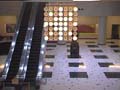
In the moment Fujihata is experimenting with web cams and GPS cams. In his project Light on the Net he is allowing the user-visitor to turn on or off any of a bank of 49 20W lights in the lobby of Gifu Softopia Center west of Tokyo, Japan.
Auch dieses Jahr wird ein alter Gast der Ars Electronica wieder als Juror in der Kategorie Interaktive Kunst dabei sein: Masaki Fujihata, einer der Pioniere der japanischen Computerkunst. Er entwickelte bereits Anfang der 90-er Jahre erste interaktive Installationen, wobei er multimediale Strategien einbezog, um den virtuellen Raum als Kommunikationsraum zu hinterfragen. In seinen Arbeiten verbindet er seit jeher künstlerische Ideen mit neuesten Forschungsergebnissen der Informationstechnologie. Beim Prix Ars Electronica 1996 erhielt Fujihata die Goldene Nica in der Kategorie Interaktive Kunst für Global Interior Project. Vielen Besuchern wird noch seine Performance Small Fish in Erinnerung sein, die er bei Ars Electronica 2000 zeigte. Diese Performance war eigentlich wie ein interaktives Bild, das Musik erzeugt und als digitales Instrument für ein ungewöhnliches Konzert zum Einsatz kam.
Zur Zeit experimentiert Fujihata mit WebCams und GPS-Cams. Bei Light on the Net, einem seiner neuesten Projekte, kann der Besucher 20W-Leuchten in einer Lichtskulptur in der Lobby des Gifu Softopia Center ein- oder ausschalten.

